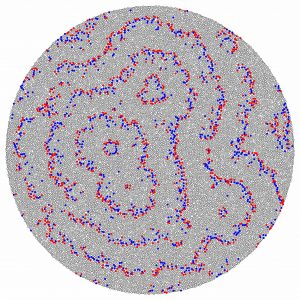
 UNCONVENTIONAL COMPUTING DISCUSSIONS, 5th July from 13:00–15:00, 2X242, Bristol Business School, Frenchay Campus, Bristol
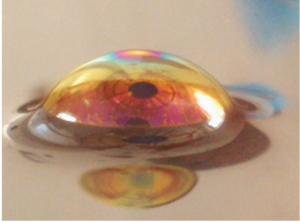 13:00-13:45 – INTELLIGENCE: A DICHOTOMOUS PERSPECTIVE? Invited talk by Professor Alessandro Chiolerio (Istituto Italiano di Tecnologia and UWE Visiting Professor )
Intelligence, understood as a cognitive process, can be described both through a symbolic approach, which couples itself well with the adoption of technological elements such as the digital world, and through a continuum approach, more familiar with biology. Retracing the features that the study of artificial intelligence proposes to us in deconstructing human cognitive processes, we will evaluate which and how many of these are fundamental, paying particular attention to higher plants. Phenomenological universalities, sequentiality, causality will be introduced and discussed. The main electronic and computer implementations will be briefly discussed, with a reference to holonomic machines by means of which it is expected to restore a link that closes this apparent dichotomy between artificial and biological intelligence.
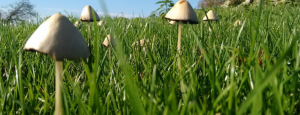 14:00-15:00 – DO FUNGI REALLY TALK? A performance by Andrew Adamatzky (UWE), Alessandro Chiolerio (IIT) and Mohammad Mahdi Dehshibi (UC3M), moderated by Konrad Szaciłowski (AGH University of Technology).
Mohammad, Alessandro and Andrew will be sharing their insights into analysis of electrical activity of fungi and trees. By criticising each other’s works they will aim to understand if the electrical activity of fungi and plants is a language or just an artefact of biophysical modifications of the growing mycelium networks and plants’ vascular system. As demonstrated in [1] electrical activity of fungi is more complex than any European language. In [2] it was shown that in some statistical aspects fungal electrical activity resembles statistical parameters of human language. In [3] spike-based communication between trees has been recorded.
- Dehshibi, M. M., & Adamatzky, A. (2021). Electrical activity of fungi: Spikes detection and complexity analysis. Biosystems, 203, 104373.
- Adamatzky, A. (2022). Language of fungi derived from their electrical spiking activity. Royal Society Open Science, 9(4), 211926.
- Chiolerio, A., Dehshibi, M. M., Vitiello, G., Bernard, A., Ceretto, P., Arvat, M., & Adamatzky, A. (2022). Bio-electric potentials in superior plants: electric collective behaviour. bioRxiv.
 Alessandro Chiolerio obtained his PhD from the Physics Department of Politecnico di Torino in 2009 where he exploited quantum confinement in metals to perform information processing via the electron spin channel. In the following years, he studied transport properties of nanocomposite materials, exploring the conditions for percolation and the occurrence of resistive switching. He visited several institutes, such as NASA’s Jet Propulsion Laboratory (Pasadena, USA), the Max Planck Institute (Halle, DE) and the University of the West of England (Bristol, UK) where he is visiting professor, developing ideas and performing experiments on liquid state cybernetic systems, in particular holonomic information processing. Author of around 125 scientific articles and 34 patents, he has raised over € 10 million in competitive funding and private capital.
 Mohammad Mahdi Dehshibi is an Associate Professor with a PhD in computer vision (Islamic Azad University, Iran). He works in Affective Computing, Complex Systems Modelling, and Unconventional Computing. In 2018, he began working as a senior research scientist at UOC (Barcelona, Spain) to develop explainable deep learning models to advance understanding human emotions and well-being. He collaborated on the FUNGAR EU-funded project, developing a tool for mathematical analysis of the complex electrical activity of mycelium networks. In 2022, Mohammad joined the UC3M (Madrid, Spain) as a senior data scientist to collaborate on the EU-funded BODYinTRANSIT project. He is also a visiting scholar at Unconventional Computing Lab (UWE, Bristol).
 Andrew Adamatzky is Professor of Unconventional Computing and Director of the Unconventional Computing Laboratory, Department of Computer Science, University of the West of England, Bristol, UK. He does research in molecular computing, reaction-diffusion computing, collision-based computing, cellular automata, slime mould computing, massive parallel computation, applied mathematics, complexity, nature-inspired optimization, collective intelligence and robotics, bionics, computational psychology, non-linear science, novel hardware, and future and emergent computation. He has authored seven books, mostly notable are ‘Reaction-Diffusion Computing’, ‘Dynamics of Crow Minds’, and ‘Physarum Machines’, and has edited 22 books in computing, most notable are ‘Collision Based Computing’, ‘Game of Life Cellular Automata’, and ‘Memristor Networks’. He has also produced a series of influential artworks published in the atlas ‘Silence of Slime Mould’. He is Founding Editor-in-Chief of ‘J of Cellular Automata’ and ‘J of Unconventional Computing’ and Editor-in-Chief of ‘J Parallel, Emergent, Distributed Systems’ and ‘Parallel Processing Letters’.
 Konrad Szaciłowski graduated from the Faculty of Chemistry, Jagiellonian University (Kraków, Poland) in 1995 (MSc) and 2000 (Ph.D.). After habilitation (2008) he has moved from Jagiellonian University to AGH University of Science and Technology. Now he is a group leader at the Academic Centre of Materials and Nanotechnology. His initial interest in photochemistry and spectroscopy of coordination compounds has gradually evolved towards molecular and nanoscale logic devices and finally towards unconventional computing. At the moment his main research interests encompass the design of inorganic materials for memristive applications, mimicking of neutral and synaptic processes in inanimate systems, reservoir computing and relations of musical harmony with other fields of science. He is an author of the book “Infochemistry: Information processing at nanoscale” (Wiley 2012) and numerous papers in fields of coordination chemistry, material science, spectroscopy, catalysis, and electrochemistry. In his free time he enjoys classical music, philately and single malts from Islay and Speyside.
Contact: Andy Adamatzky <andrew.adamatzky@uwe.ac.uk>